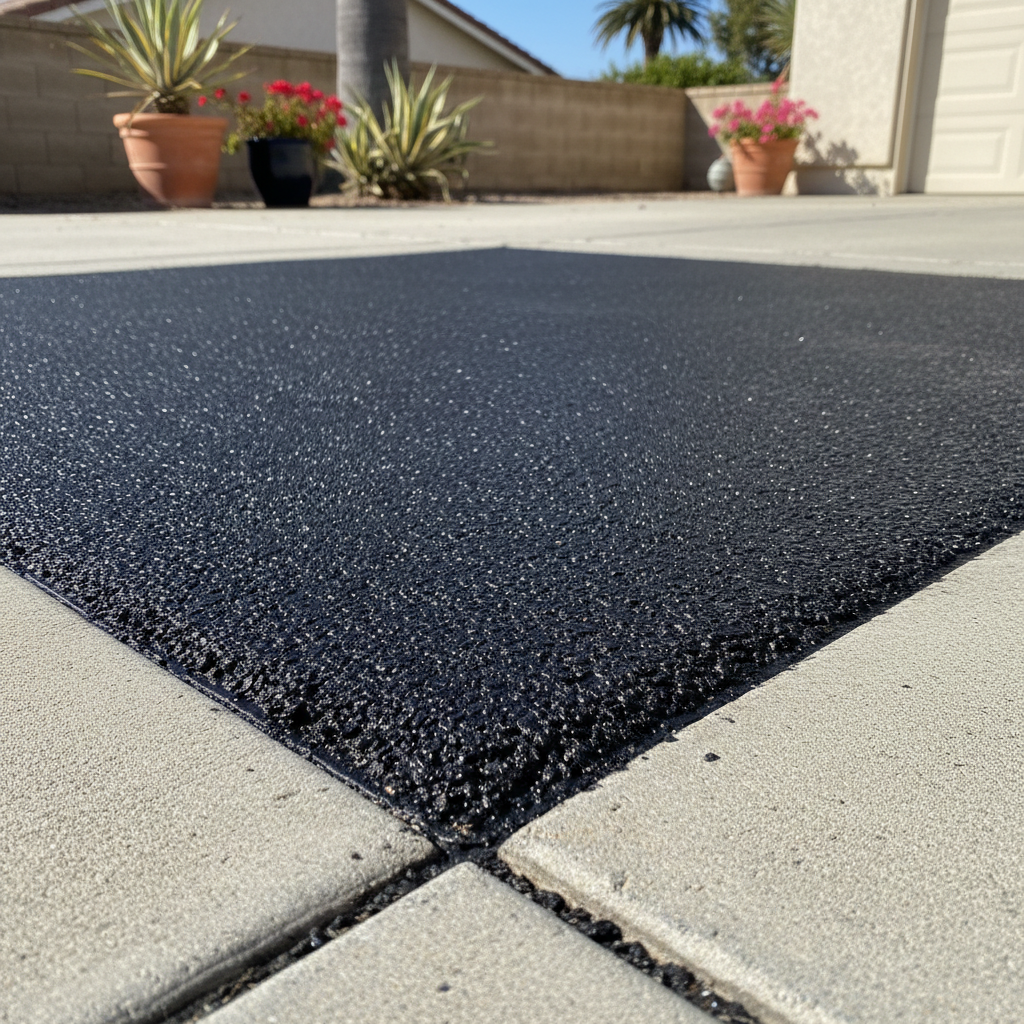
Alright, let's talk about asphalt patching. I get a lot of calls from folks around Placentia, especially after a hot summer or a wet winter, asking about cracks and potholes. It's a common issue, and fixing it sooner rather than later can save you a lot of headaches and money down the road. Here are some of the most common questions I hear, and my honest answers.
What kind of damage needs patching, and when is it too late?
Good question. Patching is usually for isolated damage. Think potholes, alligator cracking that's confined to a specific area, or deep cracks that are starting to spread. If you've got a single pothole or a small section of your driveway that's crumbling, patching is your go-to. It's a targeted repair, not a full overhaul.
When is it too late? Well, if more than about 25-30% of your driveway shows extensive damage – I'm talking widespread alligator cracking, multiple deep potholes, or significant rutting – then patching becomes a bit like putting a band-aid on a broken leg. You might be better off considering a full overlay or even a complete replacement. Patching a huge area often just means you'll be patching the spots around those patches pretty soon, if you catch my drift.
What's the difference between cold patch and hot mix asphalt?
This is a big one, and it's where a lot of DIYers can go wrong. Cold patch, or cold mix, is what you usually buy in bags at the hardware store. It's designed for temporary fixes, especially in colder weather or for quick emergency repairs. You can dump it in a pothole, tamp it down, and it'll hold for a bit. But it doesn't bond permanently to the existing asphalt, and it's not nearly as durable as hot mix. It's a stop-gap, not a long-term solution.
Hot mix asphalt, on the other hand, is what we use as professionals. We heat it to hundreds of degrees, which allows us to compact it properly and form a strong, lasting bond with your existing pavement. It's a permanent repair that's designed to last for years. If you want a patch that holds up to the Placentia sun and daily wear and tear, hot mix is the only way to go. You can't really get hot mix for a small DIY job, which is why most homeowners call us.
Can I just fill cracks with crack filler, or do I need a patch?
It depends on the crack. If you've got hairline cracks, or even cracks up to about a half-inch wide, crack filler is usually the right choice. It's designed to seal the crack, preventing water from getting underneath your asphalt and causing bigger problems like potholes. Think of it as caulk for your driveway.
But if a crack is wider than that, or if the asphalt around the crack is crumbling or sinking, then you're probably past the point where crack filler alone will do the trick. That's when you're looking at needing a proper patch. The goal of patching isn't just to fill a hole; it's to restore the structural integrity of that section of your pavement.
How long does an asphalt patch typically last?
A properly installed hot mix asphalt patch, done by a professional, should last a good 5 to 10 years, sometimes even longer, depending on traffic and how well the surrounding pavement is maintained. It's not uncommon for a good patch to outlast other sections of an older driveway.
Now, if you're talking about a cold patch job, you might get a few months, maybe a year if you're lucky. But it's really just buying you time until you can get a permanent repair done. The lifespan of a patch really comes down to the quality of the material and the installation process.
What's involved in a professional asphalt patching job?
When we do a patch, we don't just dump asphalt in a hole. There's a process to it to make sure it lasts. First, we clean out the area thoroughly – removing any loose debris, dirt, or water. Then, we cut out the damaged section in a neat, rectangular shape. This creates clean edges for the new asphalt to bond to. We'll often apply a tack coat, which is an adhesive, to the edges of the existing pavement.
Next, we fill the area with hot mix asphalt, making sure to compact it in layers. Compaction is key; it removes air voids and makes the patch dense and strong. We use specialized equipment for this, not just a hand tamper. Our goal is to make the new patch flush with the surrounding pavement, so you don't have a bump or a dip. It's a bit more involved than most people realize, but that's what makes the difference between a temporary fix and a lasting repair.
Does patching really save money in the long run?
Absolutely, it does. Ignoring a small crack or pothole is like ignoring a small leak in your roof. It's only going to get worse. Water gets under the pavement, especially with our occasional heavy rains here in Placentia, and starts to erode the base layer. That's when a small pothole turns into a much larger, more expensive problem, or even leads to widespread failure of your driveway.
By addressing damage early with a good patch, you prevent that water intrusion and preserve the integrity of your entire asphalt surface. It extends the life of your driveway significantly, pushing off the need for a full replacement for many years. Think of it as preventative maintenance for your pavement. It's always cheaper to patch a few spots than to repave the whole thing.
After patching, what else should I do for my driveway?
Once you've got those patches in, you're in a good spot. To really protect your investment and make sure those patches (and the rest of your driveway) last, sealcoating is the next logical step. Sealcoat acts like a sunscreen and a protective barrier for your asphalt. It helps prevent water penetration, slows down oxidation from the sun's UV rays, and resists chemical spills like oil and gas.
You don't want to sealcoat immediately after a patch, though. The new asphalt needs time to cure, usually about 30 to 90 days, depending on the weather. Once it's cured, a good sealcoat every 2-3 years will do wonders for extending the life of your entire driveway, patches and all. And hey, if you've got questions about that, or anything else, All Star Asphalt Company is always here to help you out.