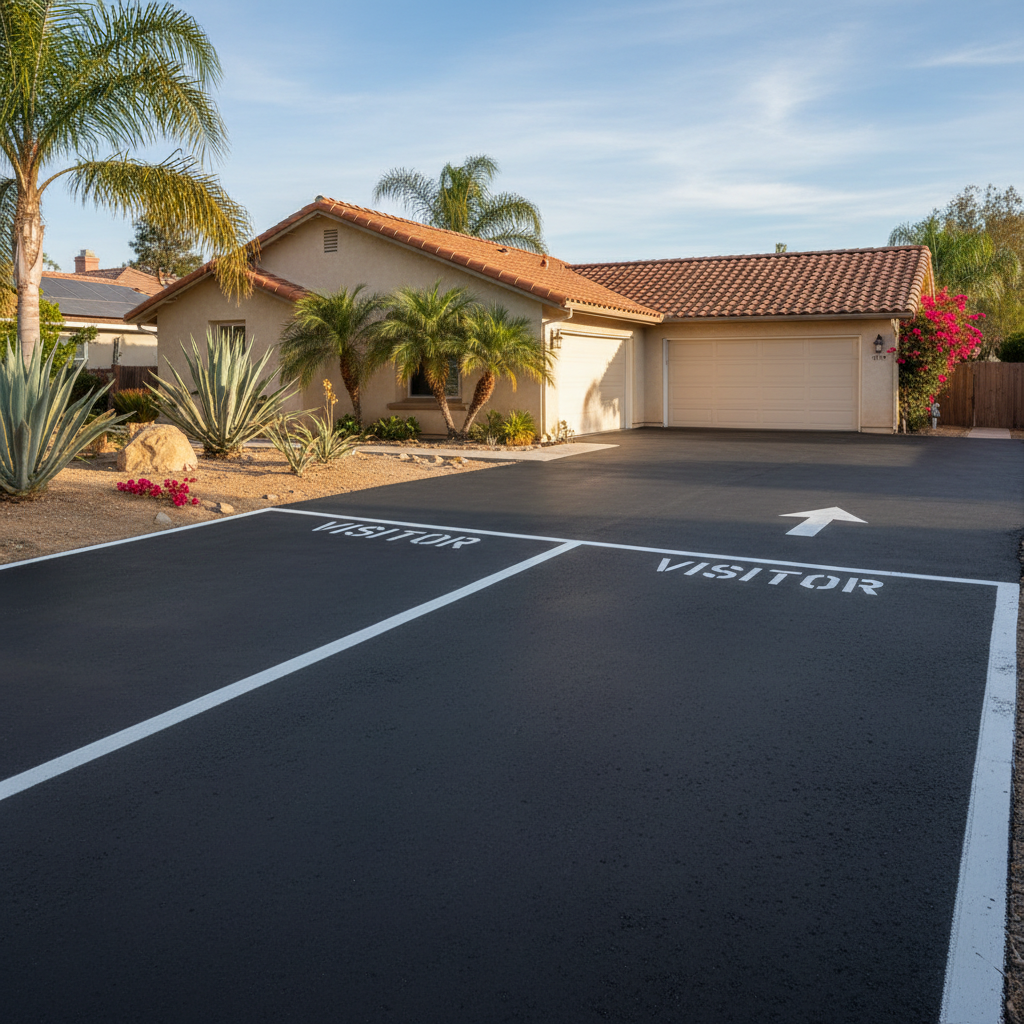
Alright, let's talk about asphalt striping. You might think it's just paint on asphalt, right? How hard can it really be? Well, I've seen enough botched jobs around Placentia to tell you it's not as simple as it looks. Homeowners, and even some HOAs, often stumble into a few common mistakes when they're planning or hiring for these projects. And those mistakes? They can cost you time, money, and a whole lot of frustration.
Mistake #1: Not Really Getting the 'Why' Behind the Stripes
This is a big one, truly. So, you've got a driveway or a shared parking area, and you want lines. But why, exactly? Is it just for looks, or do you need to follow ADA rules? Are you trying to cram in as many parking spaces as possible, or just mark out clear paths? I've seen folks in neighborhoods — like those near the Placentia-Yorba Linda Unified School District office, where you often find a mix of homes and light commercial spots — just ask for 'parking lines' without really thinking about how traffic flows. If you don't clearly define the purpose, you might just end up with lines that don't help you at all, or worse, create hazards.
Before you even pick up the phone to call a contractor, sit down and sketch out what you're hoping to achieve. Think about how cars will move, pedestrian safety, and any specific requirements for things like fire lanes or accessible parking. A good contractor, like us at All Star Asphalt Company, will definitely ask you these questions, but it helps a lot if you've already given it some thought.
Mistake #2: Only Looking at the Cheapest Price
Look, I get it. Everyone wants a good deal; who doesn't? But when it comes to asphalt striping, the lowest bid is often a giant red flag. Striping isn't just about slapping down some paint and calling it a day. It means getting the surface ready the right way, using the correct type of paint for our climate (we get some serious sun here in Southern California, which can fade cheap paint super fast), and laying out lines with precision. A contractor who gives you a rock-bottom price might be cutting corners on materials, on their crew, or even on insurance. You definitely don't want someone using cheap, flimsy paint that flakes off in six months, or messing up the layout so your parking spots are uneven or too small, do you?
Ask for references, check out their past work, and make sure they're properly licensed and insured. It's often worth paying a little more upfront for a job that's done right and actually lasts.
Mistake #3: Forgetting About Surface Preparation
This really goes hand-in-hand with the low bid problem. If your asphalt isn't clean and dry, or if it's got a lot of loose gravel, that paint just won't stick. I've seen jobs where contractors just stripe right over dirt and debris. What happens then? The paint peels right off, plain and simple. It's like trying to paint a dusty wall – the paint just won't grab on properly.
A professional will clean the surface thoroughly, often using blowers or sweepers, and make sure it's completely dry before any paint even touches the ground. If your asphalt is old and heavily oxidized, or if it's just had a fresh sealcoat, there are specific things to consider for how and when to stripe. Don't let anyone skip this crucial step, ever.
Mistake #4: Not Checking the Paint Type and How Long It Will Last
There are all sorts of traffic paints out there: water-based, solvent-based, thermoplastic, and so on. Each one has its own characteristics, drying times, and how long it'll hold up. For a residential driveway or a small HOA parking lot, you're likely looking for a durable traffic paint, but even within that category, quality can vary wildly. Some paints are made for heavy traffic, others for lighter use. Some dry faster, which is a big deal if you need to reopen an area quickly.
Ask your contractor what kind of paint they're using and why they chose it. Make sure it's good for asphalt and for the kind of wear and tear you expect. You want something that will stand up to our hot summers and those occasional rains, not something that's going to fade or wear away after just a few months.
Mistake #5: Ignoring Accessibility Rules (ADA)
Even for smaller, private properties, if you have any public access or common areas, ADA compliance for accessible parking spaces is absolutely critical. This isn't just about having a blue square on the ground; it's about specific dimensions for parking spaces, access aisles, proper signage, and even the slope of the pavement. I've seen homeowners and HOAs get into real trouble because they didn't stripe their accessible parking spots correctly, according to current regulations.
Don't just assume your contractor knows all the local codes if they don't specialize in this kind of work. Ask them specifically about ADA compliance if it applies to your project. It's much easier, and cheaper, to do it right the first time than to try and fix it later.
So, next time you're thinking about getting some lines painted, keep these points in mind. A little bit of homework upfront can save you a whole lot of headaches down the road.